This post is accompanied by a 9 minute Queer Yoga audio sequence, featuring seated and standing cues. Click here to jump straight to the movement-based practice.
Yoga invites us to deepen the connection with our true selves – perhaps our true queer selves. This inward connection can create space in our system, which helps us open up to new perspectives and connect with the external world. So, what does a connected queer yoga practice look like?

Yoga is all about connection. The word ‘yoke’ is a translation of the Sanskrit word ‘yuj’, which is where the word ‘yoga’ comes from. The word ‘yoga’ itself is about a union, or yoking, of body, mind and spirit.
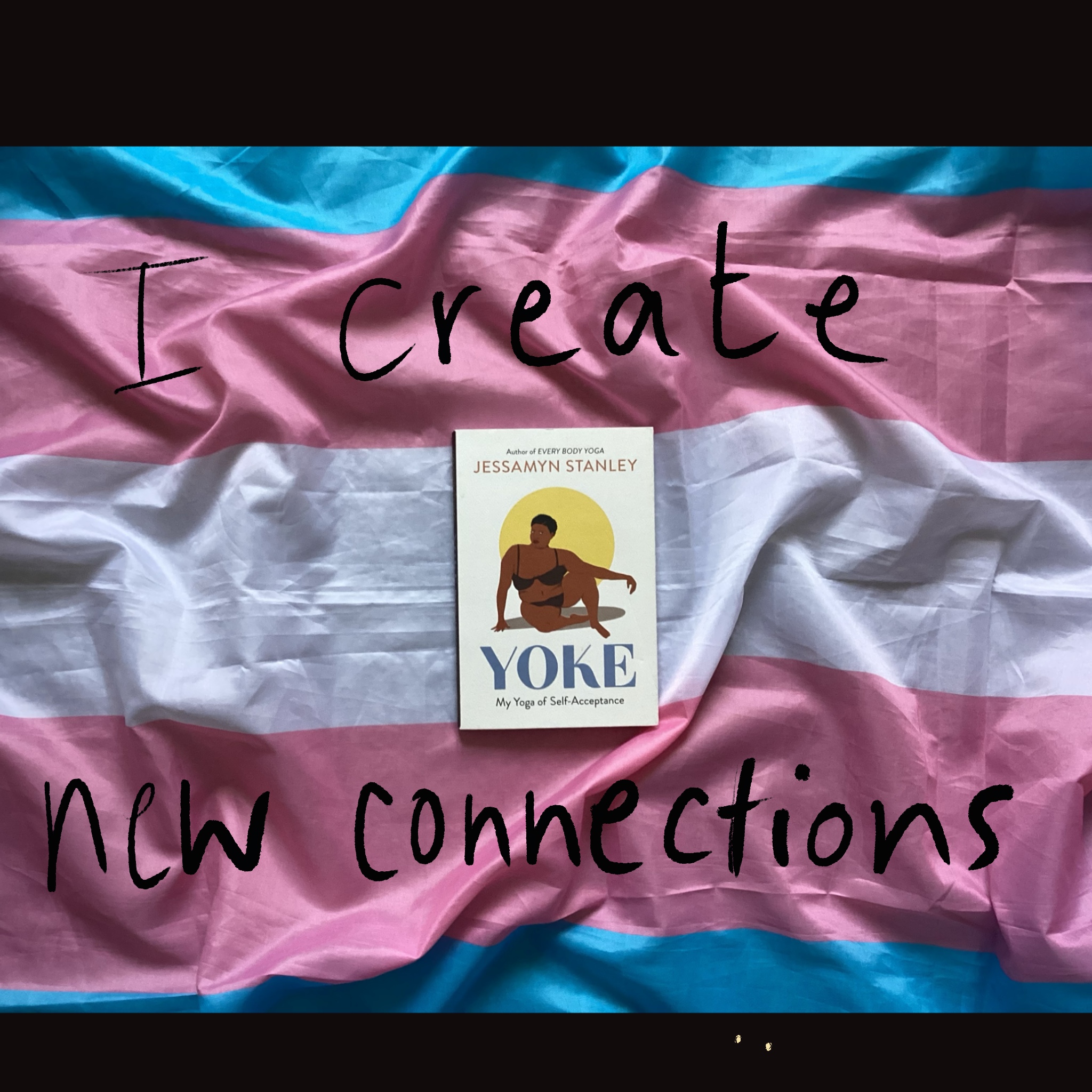
Jessamyn Stanley’s book ‘Yoke’ helped shape my understanding of Queer Yoga by connecting her lived experiences, as a fat Black person, to yoga philosophy and practices – and questioning them.
“Sometimes White yoga people will shrug off discussions of racism by insisting we focus our self-exploration upon the whole self instead of getting hung up on our physical self. And, in the same breath, these same practitioners obsess over postural practice, aka the yoga of physical body mutilation.” (p139-140)
From ‘Yoke’ by Jessamyn Stanley
I’m a white yoga person, but these words resonate because I have also come up against resistance when I’ve tried to talk to some yoga teachers about being trans / non-binary. I’ve encountered first-hand this kind of distaste, that I should bring up something so ‘human’ when to the minds of some teachers, yoga is a spiritual practice on a soul level, divorced from oppression such as transphobia and racism. Similarly, there is a lack of consideration of disabled yogis within most mainstream classes.
Reading ‘Yoke’ felt like finally being seen by a yoga teacher, not because our experiences of the world are the same – but because this book invites us to own our unique perspectives, and let our yoga celebrate this.
Once we’ve found a way to connect with ourselves, then we’ve got more chance of connecting with others. Learning about other people’s journeys can:
- inspire and uplift us
- challenge our beliefs and question how we live
- expand our minds and hearts
- create a sense of joy and freedom
A few days ago, I watched an online discussion about trans+ rights between activists in the UK and USA. Across both sides of the Atlantic, the picture is bleak. Discrimination, harassment, and loss of access to healthcare were some of the themes in this Zoom talk. Everyone turning up at this event was fighting for freedom so trans+ people can literally just go about their daily lives.
But the energy on this Zoom call was electric! You could almost feel the tangible strength of the connections being made through the screen. This felt like connected yoga to me, although nobody was doing physical movements that looked like a ‘yoga class’.
I take hope and inspiration from the work of activists like those at the Trans+ Solidarity Alliance, who organised the Trans Atlantic event. The speakers at this event were:
– Imara Jones (she/her)
– Vic Parsons (they/them)
– Dylan Tippetts (he/him)
– Nadia Whittome MP (she/her)
– Zooey Zephyr (she/her)
They remind us what connected yoga is all about, to tap into your own freedom and use that power to create more freedom for others.

There are trans+ people campaigning for more freedom for everyone in the LGBTQIA+ community (and beyond) – which reflects the roots of the Pride movement itself, when trans women of colour Marsha P. Johnson and Sylvia Rivera fought to carve out more space for all LGBTQIA+ people.
They shine a light through their connection to their own journeys, which makes more space to connect to others. If you’d like to take your yoga of activism back onto the mat or chair, here are five ways you might explore this theme through movement and the breath:
- As we move through our Asana (physical practice), we can actively try to notice where we feel freedom or constriction in our body. The breath is a valuable tool to create more sense of freedom and connection.
- By consciously directing the breath into any areas of tension, we can connect to different parts of our body.
- Slooooow down your practice on the mat or chair to make more connected decisions about how you want to use your energy.
- Take time after your Asana practice (physical movements) to meditate and / or reflect on the sensations of connection you experienced in your body.
- Let your Asana practice be a metaphor for the way you want to live life off the chair or mat, as a connected yogi. Again, you might like to journal about this, to actively look for those links between what happens on and off the yoga mat or chair.
Our sense of spaciousness can create more space for others to live authentically too – like the power that shines out of Jessamyn Stanley’s teachings, and the uplifting energy from the speakers in the Trans Atlantic event.
Given what an impact her books have had on my journey, it’s so exciting that Jessamyn is the author of the Foreword for my own book, ‘Queer Yoga’ – what an honour to have her support! And what a beautiful connection.
Refuel Your Activism: Movement
This audio sequence is a 9 minute Asana (physical) practice, featuring chair and standing options throughout. Remember to get medical advice if you are unsure whether you are fit to take part in movement-based practice. Stop straight away if you feel discomfort or pain, or feel ill in any way. Honour your body and only move in a way that feels comfortable for you.
This movement-based practice is inspired by themes in Jessamyn Stanley’s book ‘Yoke’.
Favourite Quote
“We’re not all having the same experience and that’s okay. We’ve gotta stop expecting other people to understand where we’re coming from because they just never will. If you can’t accept where you’re coming from, how the hell can anyone else? We’re strangers even to our closest friends. What makes us the same is that we’re all having our own unique experience of self-exploration and acceptance. That’s the thread that’ll always stitch us together.” (p141)
Why I love this book
There are so many different connections made in ‘Yoke’, which you can see just by glancing at the Contents page, with sections such as ‘The Hierophant’ (tarot card), ‘White Guilt’, and ‘Sacred Music & Plant Medicine’. It’s such a personal book, with auto-biographical essays which weave in different aspects of yoga philosophy through Jessamyn’s own journey. The sub-title is ‘My Yoga of Self-Acceptance’, but really this book is an invitation to each and every one of us to find our own self-acceptance. Through the personal and specific, there’s beautiful space created for a universal connection to something both deeply human and soulful.
Buy the book
Jessamyn Stanley’s book ‘Yoke’
(N.B: I don’t receive anything for sharing the link – I just think it’s great to support independent bookshops and queer authors!)
what does ‘creating new connections’ mean to you?
I’d love to hear your thoughts! Join the conversation on Instagram or Bluesky.
Leave a Reply